Sep
8
- by Elijah Stone
- 0 Comments
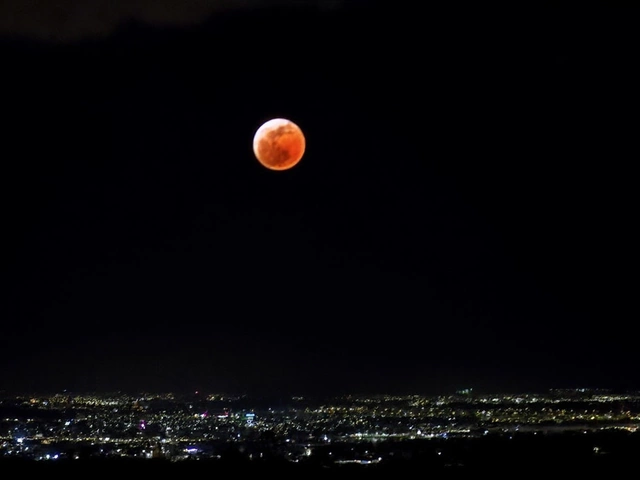
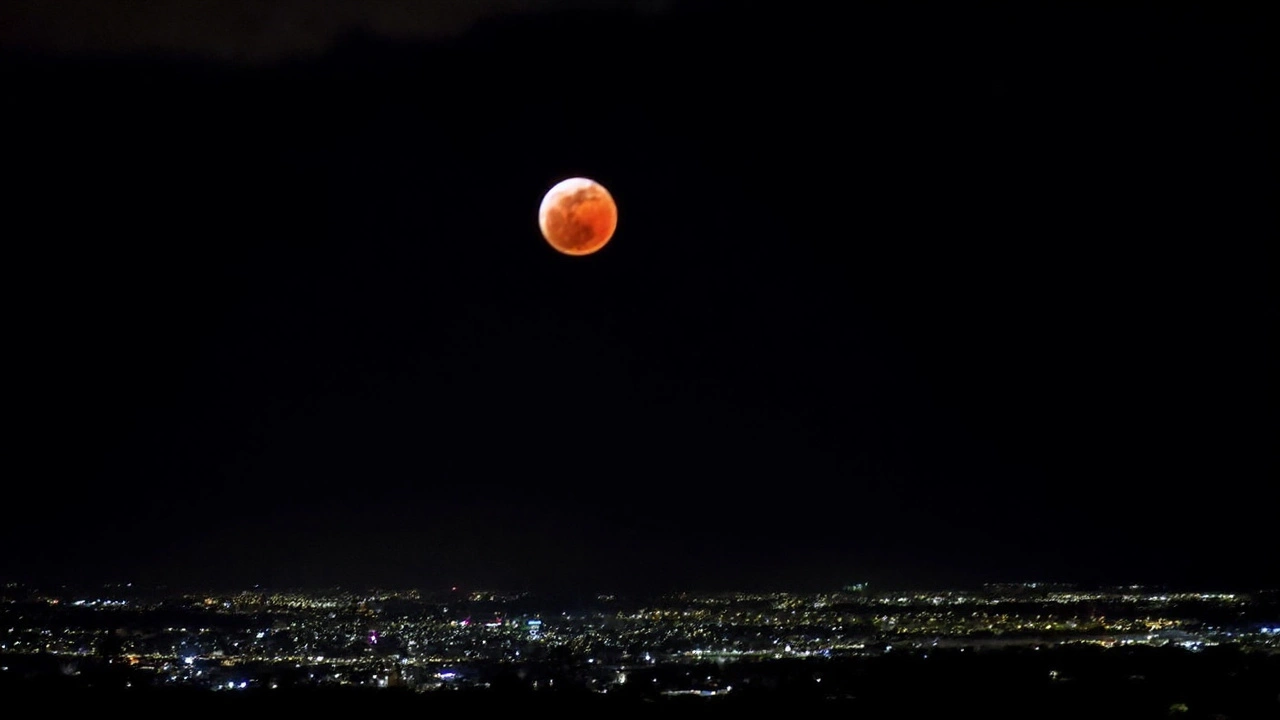
For one hour and 22 minutes, the full Moon slipped into Earth’s dark shadow and glowed a deep copper red. The Sept. 7–8, 2025 total lunar eclipse was the longest since 2022 and visible to about 85% of people on Earth. If you looked up from Asia, Australia, Africa, or Europe, you saw a calm, slow-motion sky event that needed no special gear. It was the classic blood moon, and it did not disappoint.
What the world saw, and when
The eclipse favored the Eastern Hemisphere. Asia and Western Australia had the best seats, catching every phase from the first hint of shading to the final exit from Earth’s shadow. Eastern Australia, New Zealand, Africa, and parts of the Middle East also got a strong view, though some locations lost the opening or closing act to moonrise or moonset. North and South America were out of the footprint this time.
Totality ran from 17:30 to 18:52 GMT (82 minutes). That translated to the middle of the night for a lot of viewers: 1:30–2:52 a.m. in Perth, 2:30–3:52 a.m. in Tokyo. Elsewhere, the red phase hit prime evening hours in parts of Africa and Europe. A few sample local windows for totality:
- London (BST): 18:30–19:52
- Cape Town (SAST): 19:30–20:52
- Nairobi (EAT): 20:30–21:52
- New Delhi (IST): 23:00–00:22
- Beijing (CST): 01:30–02:52
Before and after totality, the Moon showed the textbook stages. First came a faint gray wash as it entered Earth’s penumbra, the outer part of the shadow. Then a distinct bite appeared as the Moon slid into the umbra, the dark core of the shadow. The partial phase deepened until the lunar disk was fully immersed. During totality, city lights fell away, stars popped out, and the Moon’s maria—the dark basalt plains—took on subtle brown and red tones. On the way out, the sequence reversed.
This was a deep eclipse. The umbral magnitude—the measure of how far the Moon’s edge went into the umbra—reached 1.36379. In plain terms, the Moon was well inside Earth’s shadow, which helped stretch totality past the one-hour mark. For context, the longest possible total lunar eclipse, under a near-perfect alignment with the Moon near its far point from Earth, tops out around 107 minutes. So 82 minutes sits in the “long and memorable” tier.
Sky conditions still mattered. Under thin cloud, the Moon looked like a dim orange ember. Under clear, dry air, it turned a crisp brick red with a darker core. Coastal haze or smoke can mute the view. Many observers reported that binoculars made the color gradients obvious and revealed a richer star field around the darkened Moon.
Why the Moon turned red — and what comes next
A total lunar eclipse is simply geometry. The Sun, Earth, and Moon line up, with Earth in the middle. Our planet blocks direct sunlight, casting a long, conical shadow into space. The Moon drifts into that umbra and should go black. But it doesn’t, because Earth’s atmosphere bends and filters sunlight into the shadow. Red and orange wavelengths survive the trip best, so the Moon glows red—light that has passed through every sunrise and sunset around Earth’s rim at once.
The exact shade depends on the state of the atmosphere. Clean, clear air makes a brighter red or copper Moon. Dust, smoke, or volcanic aerosols darken it. Astronomers often describe the effect using the Danjon scale from L=0 (very dark, almost invisible) to L=4 (bright copper). Many reports from this eclipse placed the color in the middle—noticeably red, but not so bright that it washed out the stars.
Two other factors shape the experience: distance and depth. When the Moon is near apogee (its farthest point from Earth), it moves more slowly against the sky, which can lengthen totality. And the deeper it crosses the umbra, the longer it stays red. This eclipse checked both boxes: a deep path and a leisurely pace.
Missed the show in the Americas? The calendar delivers another chance soon. A total lunar eclipse on March 2–3, 2026 will be visible from large parts of North America, along with sections of Asia and Australia. As always, the exact timing depends on your location, but the viewing recipe stays the same: clear skies, a dark spot, and patience. No eye protection is needed for a lunar eclipse—unlike solar eclipses, it’s safe to look with the naked eye, binoculars, or a telescope.
This September event also sat inside an eclipse season—the brief window, about every six months, when the Sun lines up with the two points where the Moon’s orbit crosses Earth’s path. That’s why two eclipses tend to cluster. The same season brought a partial solar eclipse on Sept. 21, 2025. If you track these seasons, you can predict when the next alignments are likely, even before the exact maps come out.
If you’re curious about the finer details, here’s a quick guide to what observers were watching for:
- Color gradients: Often the Moon’s lower limb looks darker because it sits closer to the core of the umbra. The opposite limb can glow a lighter orange.
- Edge sharpness: A crisp umbral edge hints at clearer air worldwide. A fuzzy edge suggests more scattering from aerosols.
- Background stars: During totality, fainter stars become visible. Binoculars can reveal a surprisingly rich field.
- Lunar surface detail: Craters along the rim near the shadow edge stand out in stark relief during partial phases.
Want to photograph the next one? You don’t need fancy gear. A smartphone on a stable surface can work if you use night mode, tap to focus on the Moon, and lower exposure to avoid a blown-out disk during the partial phase. For mirrorless or DSLR cameras, a tripod is your best friend. During totality, try ISO 800–1600, aperture around f/4–f/6.3, and shutter speeds from 1/2 to 2 seconds, then bracket—shoot lighter and darker frames—because the Moon’s brightness can change across totality. For the partial phases, shorten exposures (1/60 to 1/250 second) to preserve crater detail. A remote shutter or timer cuts shake.
A few practical viewing tips also help:
- Give your eyes 10–15 minutes to adapt to the dark before totality starts.
- Step away from bright screens; even a quick glance can wash out the subtle colors.
- Bring binoculars if you have them—8x or 10x magnification shows texture and color differences cleanly.
- Check the Moon’s altitude for your location; a low Moon can sink into haze near the horizon.
People often ask if lunar eclipses change the tides or affect health. They don’t. The Moon’s phase and position do influence tides, but an eclipse itself doesn’t add anything beyond a normal full Moon. The red color is just filtered sunlight, not a sign of danger or anything supernatural. It’s a sky show powered by simple physics and the most reliable clockwork we know—the motions of the Earth and Moon.
If you tracked this eclipse from start to finish, you saw the full choreography: the gentle penumbral fade, the sharp bite of the umbra, the long red heart of totality, and the bright return. If you caught only part of it, you still witnessed a rare alignment that tied together billions of viewers from Perth to Tokyo to Nairobi to London. And if you slept through it, mark your calendar for March 2026. The Moon keeps time. It will be there.

Elijah Stone
I am passionate about delivering timely and accurate news to keep the public informed. With a focus on daily news in the United States, I enjoy dissecting current events and presenting them in a way that's both accessible and engaging. My writing aims to spark conversations and encourage readers to stay updated with the rapidly changing world around them. I believe in the power of journalism to make a difference, and I'm dedicated to maintaining its integrity and relevance in today's society.